
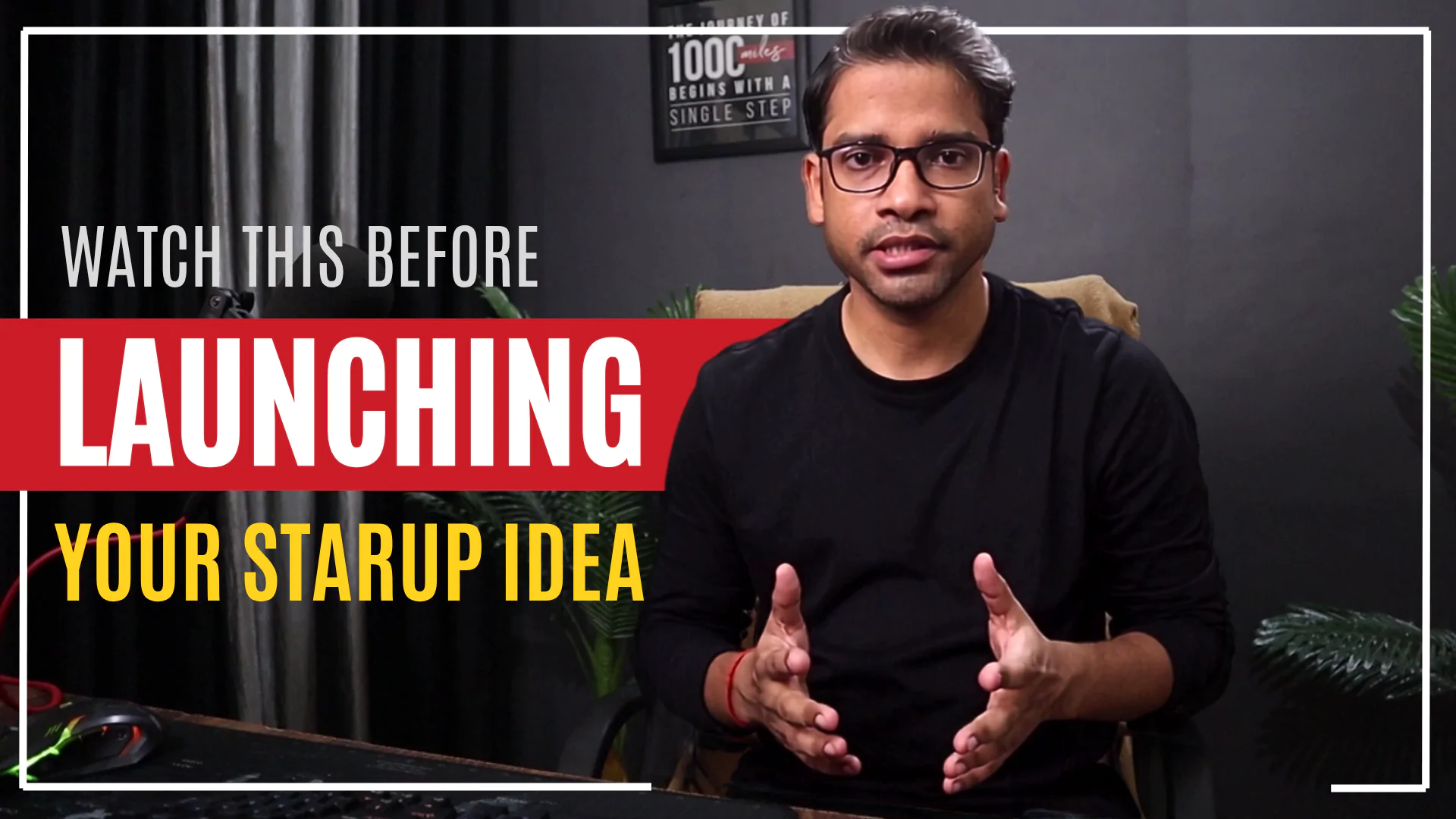
You spend a year building your dream restaurant. The food is amazing. You unlock the doors. Nobody walks in.
Not because the food is bad. Because nobody knew you were opening. Adarsh Awasthi, founder of ROI Valley, says this exact thing happens to many startups.
This article gives you the full video, the real mistake, and what smart founders do instead.
(Watch the Video)
Read the transcript
Imagine this.
You spend one whole year building your dream restaurant.
The food is amazing. The place looks beautiful.
Finally, you unlock the doors…
But nobody walks in.The Twist
Not because the food is bad.
Because nobody knew you were opening.
And that’s exactly what happens to many startups.The Mistake
Founders spend months building the product.
But they spend only a few days planning the launch.
That’s the biggest mistake.
A great product doesn’t market itself.
People can’t buy what they don’t know exists.The Solution
The smartest founders don’t wait for launch day.
They start building an audience months before.
They share their journey.
They solve real problems.
They earn people’s trust.The Payoff
So when launch day finally arrives…
People are already waiting.
That’s the difference between a launch…
And a quiet opening.
Before your next launch…
Ask yourself this.
If I launch tomorrow…
Who will show up?
If you don’t have an answer…
Don’t build more features.
Build your audience first.
At a Glance
- A great product alone doesn’t guarantee attention. Like a restaurant nobody knows about, even a strong offering can open to silence.
- Founders often plan launches too late. Months go into the product, but only days go into telling people about it.
- People can’t buy what they don’t know exists. Awareness has to be built before demand can follow.
- Smart founders start early. They build an audience months before launch day, not the week of.
- Sharing your journey builds trust. Solving real problems publicly earns attention before you ever ask for a sale.
- Early trust changes launch day. Instead of starting from zero, people are already waiting to see what you’ve built.
- One question reveals the gap. Asking “who would show up if I launched tomorrow?” shows whether you’re ready.
Key Takeaways
- A launch needs more than a good product. Without awareness, even a great product can open to silence.
- Don’t wait until launch week to plan visibility. Audience building takes months, not days.
- Awareness comes before sales. People need to know you exist before they can choose to buy.
- Share your journey before you launch. Talking about the process, not just the final product, builds early interest.
- Solve real problems publicly. This is one of the ways smart founders earn trust ahead of launch day.
- A ready audience changes everything. Launching to people who already know you beats launching to strangers.
- Ask yourself the key question early. “If I launch tomorrow, who will show up?” If you can’t answer, focus on your audience, not more features.
Conclusion
Building a great product isn’t enough if nobody knows it exists. Awasthi’s restaurant example makes the point clear: silence on launch day usually comes from a lack of audience, not a lack of quality. The founders who succeed start building trust and visibility long before launch day arrives.
Ask yourself today: if you launched tomorrow, who would show up? If the answer is unclear, start building your audience now.
Ready to Sharpen Your Pitch?
📅 To Book a FREE 30-Minute Consultation with ROI Valley – Apply Now
