
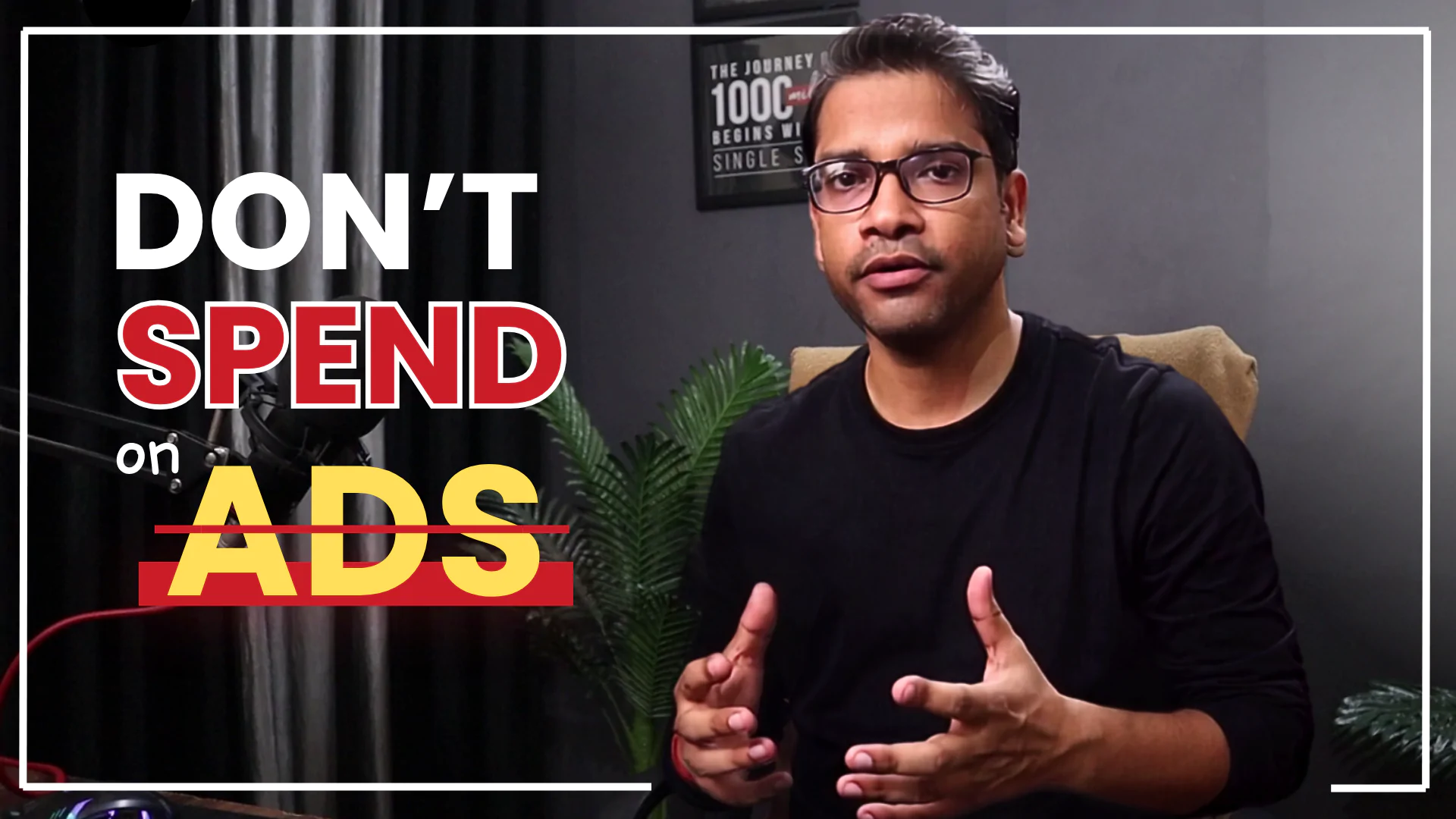
You increase your ad spend. Clicks come in. But the right customers still don’t respond.
Adarsh Awasthi, founder of ROI Valley, says the problem often isn’t budget. It’s the words you’re using to reach your ideal customer.
This article gives you the full video, the practical fixes, and one action you can test this week.
(Watch the Video)
Read the transcript
Hey startup founders!
You now know who your ideal customer is.
Now let me show you how that changes every word you write.Start with your homepage.
Forget generic headlines.
Write your customer’s biggest problem using their exact words.Now look at your ads.
Open with the trigger event.
For example, “Spent ₹1 lakh on ads and got only three enquiries?”
The right customer will stop scrolling instantly.Next, check your email subject lines.
Name one specific problem your customer is facing today.
Your email instantly feels more relevant.Now read your copy aloud.
Ask yourself one simple question.
Does this sound like a human talking to another human?
Or does it sound like a company brochure?Remember this.
When you write for a category, it feels generic.
When you write for one person, it feels personal.
Real language always wins.Here’s your action.
Pick just one thing. Your homepage, one ad, or one email subject line.
Rewrite it using your customer’s actual language.
Then test it for the next two weeks.
At a Glance
- Knowing your customer should change your copy. Once you’re clear on who they are, every word you write should reflect that.
- Homepages need the customer’s exact words. Generic headlines don’t connect the way specific, real language does.
- Ads work best with a trigger event. Naming a specific moment, like overspending on ads with poor results, stops the right person from scrolling.
- Email subject lines need one real problem. Naming something specific makes an email feel relevant instantly.
- Reading copy aloud reveals the truth. If it sounds like a brochure instead of a person, it needs rewriting.
- Writing for one person beats writing for a category. Specific language feels personal. Generic language feels like noise.
- One small test can start the shift. Rewrite a single homepage line, ad, or email subject, then test it for two weeks.
Key Takeaways
- Let your customer knowledge shape your copy. Once you know who you’re speaking to, use it everywhere you write.
- Use your customer’s exact words on your homepage. Their language, not generic phrasing, describes their problem best.
- Open ads with a trigger event. A specific, recognizable moment gets the right person to stop scrolling.
- Make email subject lines specific. Naming one real problem increases relevance instantly.
- Read your copy out loud. If it sounds like a brochure, it’s not connecting like a real conversation.
- Write for one person, not a whole category. Personal language consistently outperforms generic messaging.
- Test one rewrite for two weeks. Pick your homepage, one ad, or one email subject line, and measure the difference.
Conclusion
More ad spend won’t fix messaging that doesn’t connect. Adarsh’s point is clear: once you know your ideal customer, that clarity needs to show up in your homepage, ads, and emails. Real, specific language consistently beats generic phrasing.
Pick one piece of copy this week. Rewrite it using your customer’s actual words, then test it for two weeks before spending more on ads.
Ready to Sharpen Your Pitch?
📅 To Book a FREE 30-Minute Consultation with ROI Valley – Apply Now
