
You explain your startup. The person smiles. Then they change the subject.
It feels like they didn’t like your product. But that’s often not true.
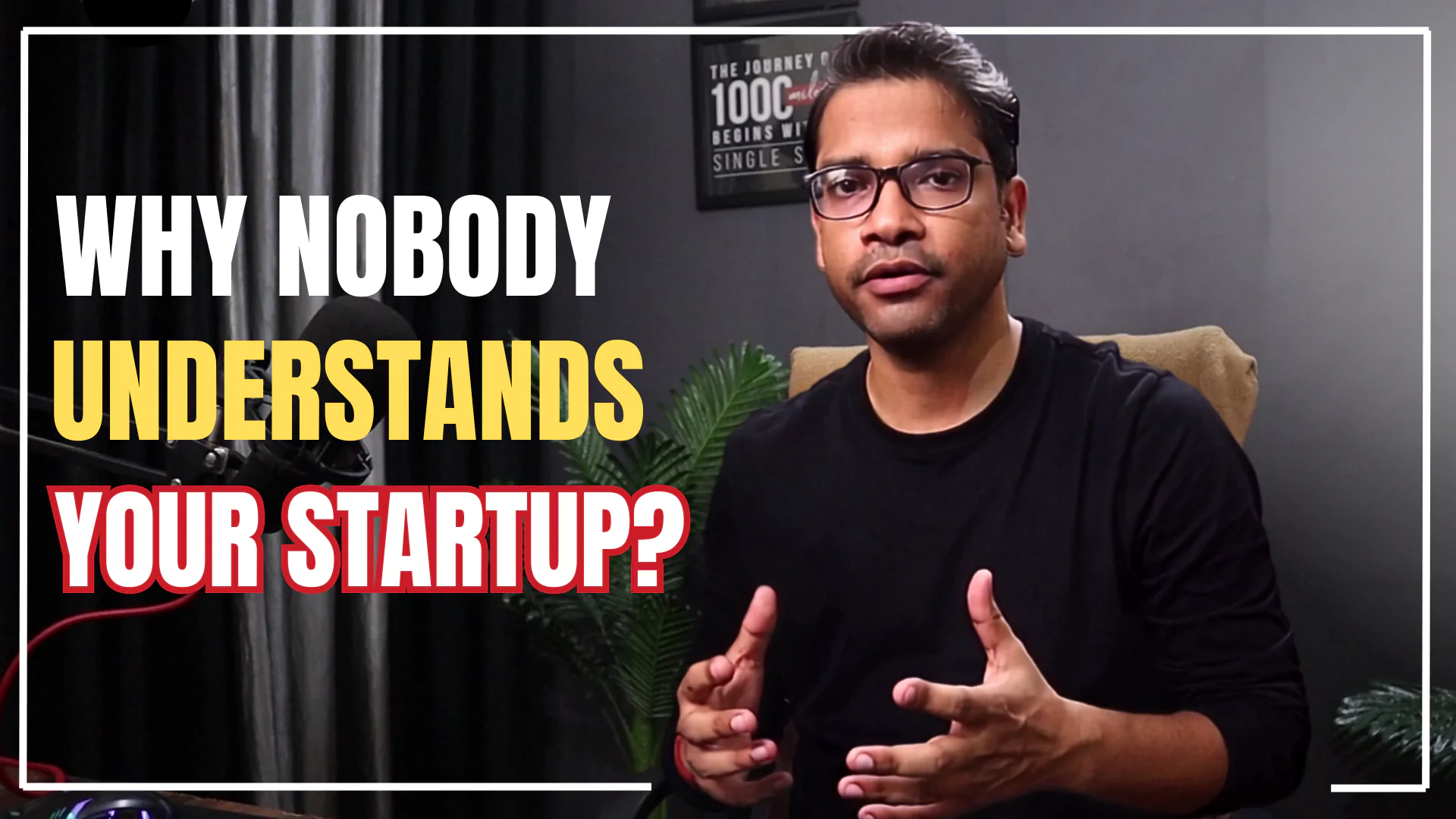
Adarsh Awasthi, founder of ROI Valley, says the real problem is different. It’s not your product. It’s how you explain it.
This article breaks down his short video. You’ll get the full transcript, the key points, and simple takeaways you can use today.
(Watch the Video)
Read the transcript
You built something useful.
You explain it.
They smile and change the subject.
The product isn’t the problem.
The explanation is.
Customers don’t buy products.
They buy solutions to their problems.
If your pitch sounds like a product description or a list of features, people switch off.
As founders, we’re too close to what we’ve built.
We’ve spent months thinking about it.
The person in front of us is hearing it for the first time.
They don’t have our context.
You have about 10 seconds to make it click.
If someone needs to ask a follow-up question just to understand what you do, you’ve probably already lost them.
Nobody buys a drill.
They buy the hole.
People care about the outcome, not the tool.
Here’s a simple test.
Explain your startup in one sentence, as if you’re talking to your neighbour.
If it takes more than 15 seconds, rewrite it.
At a Glance
- Don’t blame the product too fast. A weak reaction often means a weak explanation, not a weak product.
- Sell the outcome, not the features. People want to know what they’ll get. Not what your product does step by step.
- You’re too close to your own idea. You know everything about your product. Your listener knows nothing. Speak to them, not to yourself.
- You have 10 seconds. That’s how fast people decide if they’re interested. Make those seconds count.
- Follow-up questions are a warning sign. If someone has to ask “wait, what do you do?” – your pitch needs work.
- Think “hole,” not “drill.” People don’t care about your tool. They care about the result it gives them.
- Use the neighbour test. Explain your startup in one sentence. Time it. If it’s over 15 seconds, simplify it.
Key Takeaways
- A bad reaction doesn’t always mean a bad product. Check your pitch before you rebuild your product.
- Talk about outcomes, not features. Tell people what they’ll gain, not just what you built.
- Simplify for a stranger. Explain it like you would to a neighbour who knows nothing about your industry.
- Speed matters. You only have seconds to make sense. Long explanations lose people.
- Test your pitch often. Say it out loud. Time it. Fix it if it’s too long or confusing.
Conclusion
Most founders think their product is the problem when people don’t respond well. Adarsh Awasthi, in this video makes a simple point: it’s usually the pitch, not the product.
Fix how you explain your idea. Focus on outcomes. Keep it short. Use the neighbour test.
It’s a small change. But it can make a big difference in how people understand and respond to your startup.
Ready to Sharpen Your Pitch?
📅 To Book a FREE 30-Minute Consultation with ROI Valley – Apply Now
👤 Follow Adarsh Awasthi:
Blog: www.adarshawasthi.com
LinkedIn: /adarshawasthilive
Instagram: /adarshawasthilive
🏢 Connect with ROI Valley on Social Media:
WhatsApp: Chat now
LinkedIn: /roivalley
Instagram: /roivalley
